
Advertorial or Sponsorship User published Content does not represent the views of the Company or any individual associated with the Company, and we do not control this Content. In no event shall you represent or suggest, directly or indirectly, the Company's endorsement of user published Content.
The company does not vouch for the accuracy or credibility of any user published Content on our Website and does not take any responsibility or assume any liability for any actions you may take as a result of reading user published Content on our Website.
Through your use of the Website and Services, you may be exposed to Content that you may find offensive, objectionable, harmful, inaccurate, or deceptive.
By using our Website, you assume all associated risks.This Website contains hyperlinks to other websites controlled by third parties. These links are provided solely as a convenience to you and do not imply endorsement by the Company of, or any affiliation with, or endorsement by, the owner of the linked website.
Company is not responsible for the contents or use of any linked website, or any consequence of making the link.
SoLo Funds Reviews and Ratings

SoLo Funds logo
SoLo Funds is a legitimate peer-to-peer lending app where members fund each other’s small, short-term loans. Most SoLo Funds reviews ask whether this model really works for borrowers.
So, is SoLo Funds legit, and what does borrowing actually cost?
This SoLo Funds review covers the platform’s costs, current standing, and real user feedback.
What is SoLo Funds?
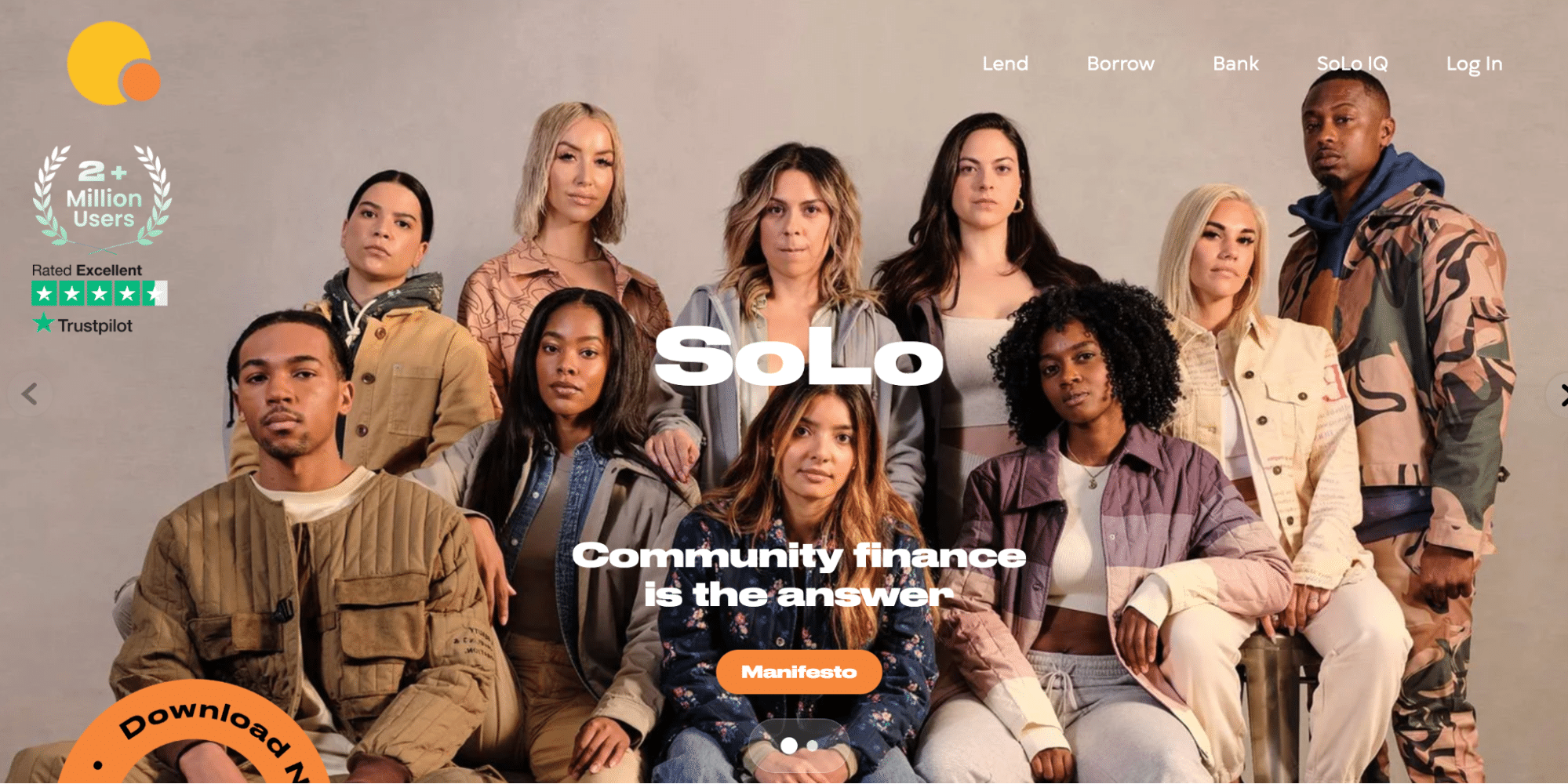
SoLo Funds website homepage
SoLo Funds is a peer-to-peer lending app based in Los Angeles, launched in 2018 under co-founder and CEO Travis Holoway.
Members called lenders fund small, short-term loans for other members called borrowers.
SoLo doesn’t lend its own money. The company operates the marketplace, services the loans and handles collections.
It is a financial technology company, not a bank, with banking services from Bangor Savings Bank, Member FDIC.
SoLo Funds at a glance
- Model: SoLo operates a peer-to-peer marketplace and does not fund loans itself
- Founded: 2018 in Los Angeles, led by co-founder and CEO Travis Holoway
- Loan range: About $20 up to $650
- Cost: No stated interest rate. Borrowers add a tip for the lender and a donation for SoLo
- Funding speed: Typically under 20 minutes from request to cash, per the company
- Repayment: About five to 15 days
- Credit check: None. Underwriting uses the SoLo Score from linked bank history
- Banking: SoLo is not a bank. Banking services and the debit card come through Bangor Savings Bank, Member FDIC
- Loans funded: More than 2.5 million, per the company
- Membership: 82 percent of members come from underserved zip codes, per the company
- CFPB status: The May 2024 lawsuit was dismissed with prejudice in February 2025. No court ruled on the merits
- Better Business Bureau (BBB) status: Accredited again since August 2025 with a B rating
- Trustpilot: 4.6 TrustScore as of September 2026





How does Solo Funds work?
- Sign up: Create an account, verify basic information and join the community. No complex approval process.
- Post a request: The borrower lists the amount, the purpose, the repayment date and the tip offered.
- Underwriting: SoLo uses the SoLo Score from linked bank history, not a traditional credit check.
- Funding: Lenders browse open requests, check each borrower’s score and repayment history, then choose what to fund.
- Speed: Cash typically arrives within 20 minutes once a member funds the request, per the company.
- Repayment: The borrower repays on the terms they set, and SoLo Booster tracks the balance.
- Credit building: A Credit Builder program lets on-time activity help establish credit history.
SoLo Funds key services
SoLo Funds groups its services into four products covering borrowing, lending, banking and AI-guided money management.
Borrow
Borrowing covers small, short-term cash advances funded by other members. SoLo pitches it as an alternative to payday loans and credit cards, with no rollover fees and no compound interest.
Lend
Lenders earn money by funding other members’ requests, with a voluntary tip as the return. Each listing shows the amount, the purpose, the repayment date and the tip offered.
SoLo Lender Protection covers a funded loan if payments go wrong. An Impact Account lets members deposit money, keep a minimum balance and collect monthly returns without picking each loan.
Bank and SoLo Wallet
SoLo Wallet pairs the marketplace with banking features through Bangor Savings Bank, Member FDIC. The SoLo Funds Mastercard debit card works anywhere Mastercard is accepted, with an ATM network and no overdraft fees.
Interest-earning accounts and life insurance are listed as upcoming. The wallet also ties into improving a member’s SoLo Score and funding chances.
SoLo IQ
SoLo IQ is the app’s AI assistant, billed as a personalized finance co-pilot. It links SoLo and bank accounts with bank-grade encryption.
Members can ask budgeting or goal questions and get plain-language answers. The tool then gives real-time, personalized recommendations.
SoLo Funds pricing and fees
SoLo posts no single interest rate. Borrowers self-select the cost of each request through an optional tip to the lender and an optional donation to SoLo.
According to SoLo’s 2023 Total Cost Report, the average total cost is 17 percent of the loan.
The figure combines a 10.4 percent average tip, a 6.2 percent average donation and a 0.4 percent average late fee. Costs range from zero percent up to 36 percent, and they never compound. On a $100 loan, the average borrower pays $17.
The late fee itself is 15 percent or $5, whichever is greater, paid to the lender.
A missed payment brings no credit bureau reporting. SoLo can still refer the account to third-party collections. Borrowers should review the current terms on what happens if they default on the loan.
Peer-to-peer lending vs company-funded cash advance apps
Peer-to-peer lending connects borrowers with individual investors through a platform, with no bank involved.
Each investor funds the loan directly and carries the risk, since these loans are usually unsecured. A default can mean a total loss for the person who funded the request.
Company-funded cash advance apps work the opposite way. A cash advance from apps draws on the company’s own money.
Repayment is due by the next paycheck or within two to four weeks. The company absorbs any default, so funding is guaranteed once a borrower qualifies.
SoLo Funds reviews and ratings
SoLo Funds reviews are split between strong app-store ratings and tougher complaint-board feedback across major review platforms.
Trustpilot reviews

SoLo Funds Trustpilot profile
SoLo Funds holds an Excellent 4.6 on Trustpilot across over 2,000 reviews. About 81 percent of reviewers gave five stars, while 11 percent gave one star.
The profile is claimed, SoLo invites reviews, and the company replies to 95 percent of negative ones. Trustpilot also notes SoLo may use AI assistance in those replies.
Happy reviewers cite fast funding and a simple application. Critical ones describe double-charged payments and requests that never get funded.
One September 2026 reviewer reports $12 to $30 in lender charges once a loan goes late.
Better Business Bureau (BBB) reviews
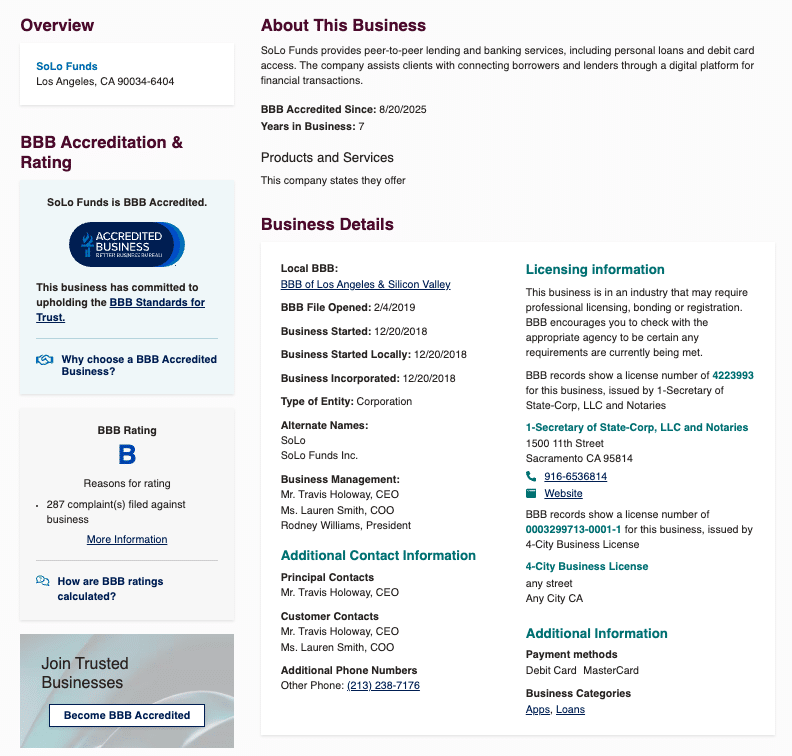
SoLo Funds BBB profile
The BBB lists SoLo Funds as accredited since August 2025, with a B rating.
The bureau cites the 287 complaints filed against the business as a reason for this grade. Customer reviews average 1.14 across 120 entries.
Complaints filed include wallet balances getting stuck in pending status for weeks, failed bank updates and blocked repayments. Support works only by email or chat, and the phone line goes to voicemail.
CFPB complaint database

SoLo Funds CFPB complaints
The CFPB database shows 140 complaints against SoLo Funds over the three years ending Sept. 22, 2026.
Payday, title, personal and advance loans lead with 91 complaints. Money transfers follow at 31, debt collection at 11 and checking or savings accounts at seven.
The newest entries date to September 10, 2026. Common issues include trouble accessing accounts and unexpected fees or interest. Every visible entry shows a timely response and a “closed with explanation” status.
SoLo also faced a CFPB lawsuit in May 2024, with an amended complaint filed that August. Allegations covered violations of the Consumer Financial Protection Act (CFPA) and the Fair Credit Reporting Act (FCRA).
The case ended Feb. 21, 2025, in a voluntary dismissal with prejudice, and no court ruled on the claims. It is listed under docket 2:24-cv-04108.
Apple App Store and Google Play
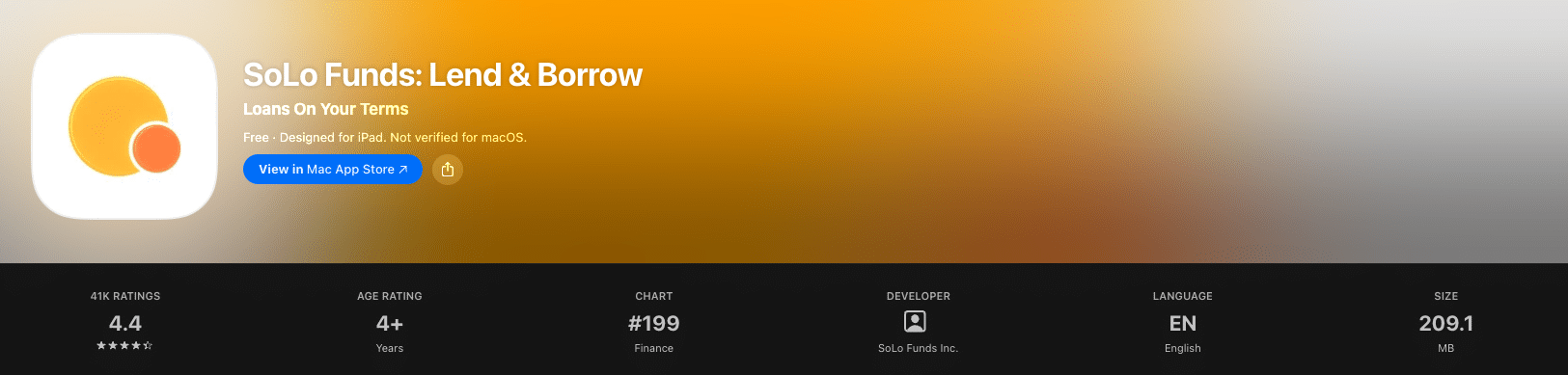
SoLo Funds Apple App Store profile
The Apple App Store shows 4.4 across about 41,000 ratings. The app ranks No. 199 in the Finance category.
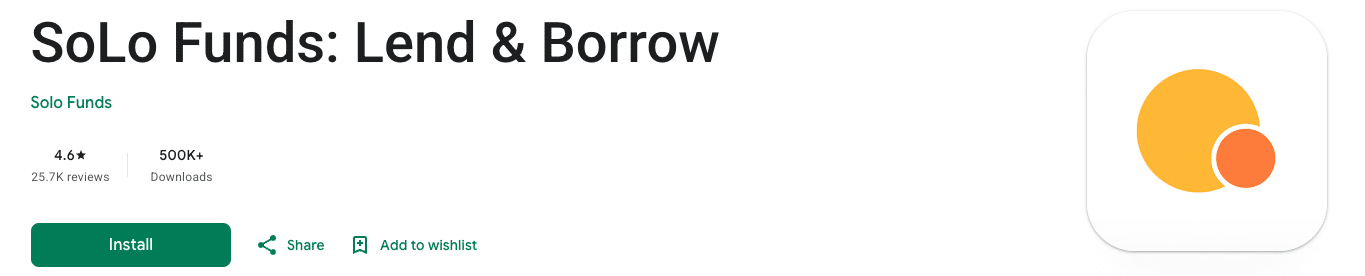
SoLo Funds Google Play Store profile
Meanwhile, Google Play shows 4.6 across roughly 25,000 reviews.
App-store reviewers praise quick approvals and the scoring system. Recent critical posts cite low starting scores that block funding and support pages with buttons that fail to respond.
Reddit reviews
Three threads across r/cashadvanceapps and r/Sololender show cautious borrower praise and sharper lender criticism.
In the June 2026 thread, borrowers call the app legit and report funding in under an hour.
The most repeated advice in both threads is to switch off the Solo donation in profile settings. Many users paid it for months without knowing it was optional.
Others warn that fees pile up, with a $585 loan approaching $700 in total repayment. Some suspect bots or automatic funding because approvals arrive at any hour.
My Experience as a Solo Lender by u/hollyxoxolove in Sololender
In a 2023 r/Sololender thread, one lender quit after a month when 38 of 40 funded loans went late. Per that poster, the 15 percent late fee erased all profit.
Commenters add that default rates stay undisclosed and withdrawals cost 1.7 percent or a two-day wait. The best requests reportedly vanish in under a second.
A 2026 comment added that donations get reimbursed after repayment and the late fee eventually reaches the lender.
SoLo Funds outcomes and success rate
Verified outcome data is thin. SoLo publishes scale numbers, not approval or repayment rates.
The company reports more than $1.4 billion in loans facilitated since 2018. It also cites a B Impact score of 139.4, well above the median for rated businesses. Both figures come from SoLo itself.
No public figure exists for the share of funded requests or the share of repaid loans.
SoLo Funds pros and cons
Before borrowing or lending on SoLo Funds, weigh the following strengths against the limitations.
Pros
- Free in-app finance courses
- Up to 90 days before default
- First repayment date is skippable
Cons
- Lender protection pays in credits, not cash
- No in-app return totals for lenders
- Repeat borrowing costs $80 to $100 monthly
Who SoLo Funds is best for
- Borrowers needing over $500
- Small first-time requests
- Tipping borrowers get picked faster
Who should avoid SoLo Funds
- Users wary of data sharing
- Residents of blocked states
- Lenders who dislike 24-hour decisions
- Anyone who wants one clear APR to compare
SoLo Funds vs Dave
- SoLo matches members with other members; Dave advances company money.
- Dave starts at $25 and caps at $500; SoLo spans $20 to $650. Few Dave members qualify for the maximum.
- Dave charges a fixed 5 percent per advance with a $5 minimum; SoLo charges a borrower-picked tip and donation.
- SoLo skips monthly membership; Dave adds up to $5 monthly and 1.5 percent on external instant transfers.
- Dave reads 180+ income and spending data points through CashAI; SoLo scores linked bank history. Neither uses a credit check.
- Both partner with FDIC-member banks; Dave is Nasdaq-listed while SoLo stays private.
- Regulators have challenged both; the Federal Trade Commission (FTC) sued Dave in November 2024 over undisclosed fees.
Is SoLo Funds legitimate?
SoLo Funds is a real operating company with seven years in business, per its BBB profile.
So, the answer is yes on legitimacy. The open question is the cost.
SoLo Funds review verdict
Is SoLo Funds legit? Yes. Nothing found in this review suggests otherwise.
But SoLo Funds reviews are divided. Happy members and angry ones describe the same product at different moments.
The cost decides whether it works for any borrower. Borrowers who accept the mechanics and repay on time get what they came for.
Anyone uneasy has cheaper options worth checking first. Remember to compare at least one alternative before borrowing.
SoLo Funds frequently asked questions
What’s the most you can borrow from SoLo Funds?
The maximum is $650, and criteria apply per SoLo’s store listings. New accounts start far lower and grow with each on-time repayment.
Can you make money with SoLo Funds?
Yes, by funding other members’ requests and collecting their tips. Returns depend on borrower repayment, and late loans can cut into earnings.
What bank does SoLo Funds use?
Bangor Savings Bank, Member FDIC, provides the banking services. SoLo itself is a financial technology company, not a bank.
How long does it take to get a loan from SoLo Funds?
Once a member funds the request, cash typically arrives within 20 minutes, per the company. Finding a member is the variable, since a request can expire unfunded.
What happens if you don’t pay SoLo Funds back?
SoLo reports nothing to the credit bureaus, but a late fee of 15 percent or $5 applies. The account can go to third-party collections, and the borrower’s SoLo Score drops.
Published July 11, 2026; Updated September 21, 2026


Sponsored Advertising Content:
Advertorial or Sponsorship User published Content does not represent the views of the Company or any individual associated with the Company, and we do not control this Content. In no event shall you represent or suggest, directly or indirectly, the Company's endorsement of user published Content.
The company does not vouch for the accuracy or credibility of any user published Content on our Website and does not take any responsibility or assume any liability for any actions you may take as a result of reading user published Content on our Website.
Through your use of the Website and Services, you may be exposed to Content that you may find offensive, objectionable, harmful, inaccurate, or deceptive.
By using our Website, you assume all associated risks.This Website contains hyperlinks to other websites controlled by third parties. These links are provided solely as a convenience to you and do not imply endorsement by the Company of, or any affiliation with, or endorsement by, the owner of the linked website.
Company is not responsible for the contents or use of any linked website, or any consequence of making the link.
This content is provided by New Start Advantage LLC through a licensed media partnership with Inquirer.net. Inquirer.net does not endorse or verify partner content. All information is for educational purposes only and does not constitute financial advice. Offers and terms may change without notice.


