
The truth behind the ‘Turkey Teeth’ label
Disclaimer: This article is intended for US audiences
There’s a particular kind of video that keeps showing up online: someone smiling, the camera zooming in, a caption dripping with sarcasm, and two words doing all the work, “Turkey Teeth.” You know the look before you even see it, teeth a little too white, a little too uniform, a little too obviously not what nature gave anyone. It’s funny, in the way internet cruelty often is, and it’s also become something bigger than a joke. Somewhere along the way, “Turkey Teeth” stopped meaning “this particular veneer job went wrong” and started meaning “this is what happens when you get dental work done in Turkey.” Those are two very different claims, and only one of them is actually true.
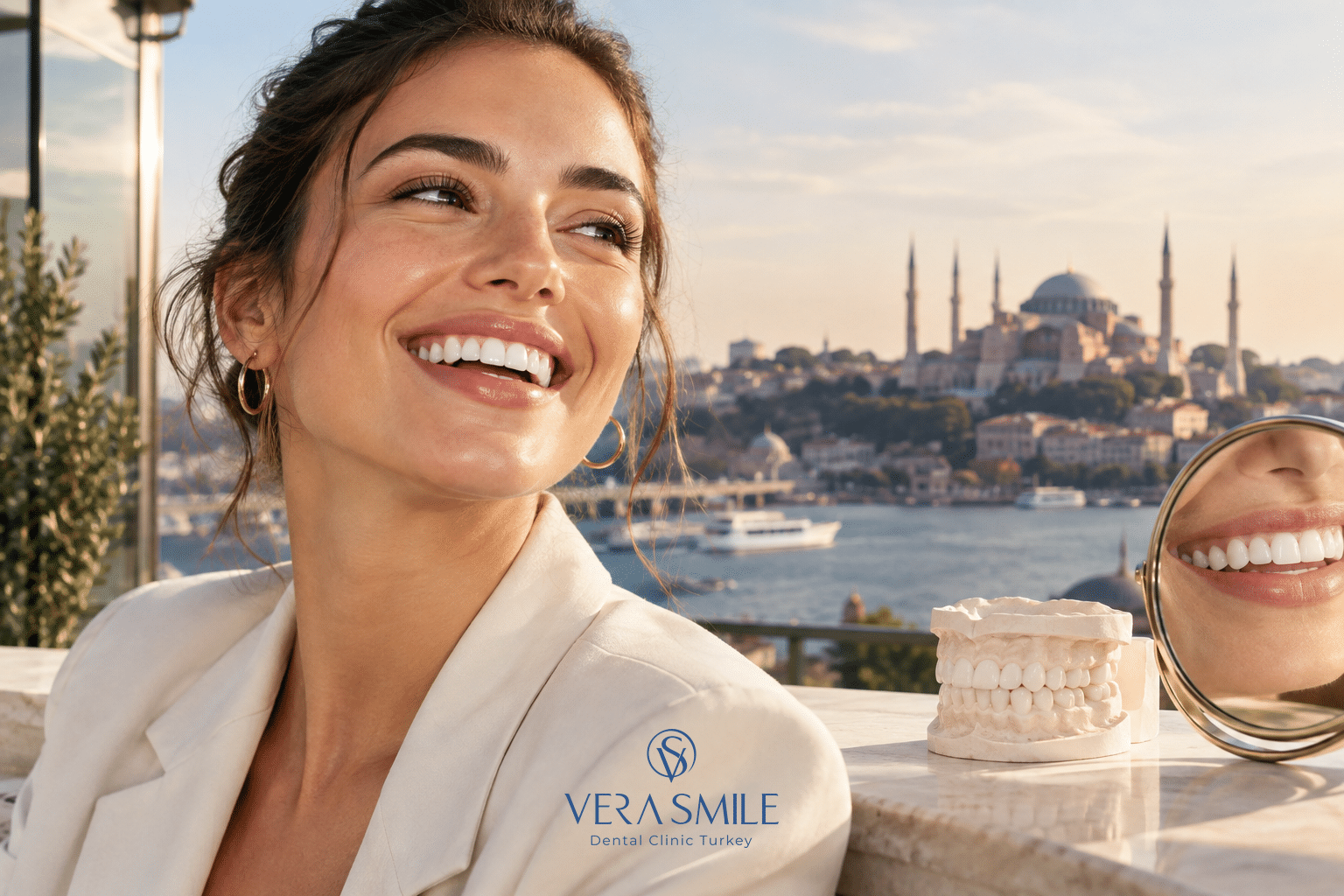
Think about how the phrase spreads in the first place. Nobody posts a video of a smile that looks completely normal. There’s no viral moment in a patient flying home from Istanbul with veneers that simply look like their own teeth, only better, because there’s nothing to mock. What gets millions of views is the outlier: the person filed down to sharp little pegs, the shade that glows under any indoor light, the crown that changes the whole shape of someone’s mouth. Those cases are real, and they’re genuinely bad outcomes: some go well beyond an unflattering camera angle, into teeth ground down past the point where they can be restored, infections that take months to resolve, and repairs that end up costing more than the original procedure did. But they’re also, by definition, the cases dramatic enough to go viral, which makes them a terrible sample to judge an entire industry by. A handful of loud failures don’t cancel out the fact that Turkey treats hundreds of thousands of dental patients a year, most of whom simply go home with a better smile and nothing to post about. That’s the nature of how these things spread: the algorithm rewards shock, not accuracy, and a label built on shock ends up describing the loudest cases instead of the most common ones.
Why the Label Landed on Turkey
So why did the stereotype attach itself to Turkey specifically, instead of just staying a story about “some bad veneers somewhere”? Mostly it’s a numbers problem. Over the past two decades, Turkey built one of the largest dental tourism industries on the planet, prices well below the UK or Western Europe, a huge base of dentists trained to international standards, and a whole support system, transfers, hotels, multilingual staff, built specifically to make the process easy for foreign patients. That scale cuts two ways. It means more satisfied patients than almost anywhere else, but it also means more total cases, including bad ones, simply because more procedures are happening. It also means the market got crowded enough to attract operators who compete purely on price, clinics that rush consultations, cut corners on hygiene, or hand off procedures to undertrained staff. Those clinics are real. They’re just not the whole picture, and they’re definitely not the same thing as “Turkey.” Any industry that grows this fast, in any country, ends up with a wide spread between its best and worst operators, and the size of that spread has a lot more to do with how loosely a market is regulated than with the culture or competence of the people working in it.
A Problem of Process, Not Geography
Here’s the part that gets lost in the meme: the practices behind a bad outcome aren’t unique to any single country. Grinding healthy enamel down to stubs to force a generic veneer, skipping a real diagnostic workup, letting undertrained staff perform irreversible reduction work, sending a patient home with no follow-up plan: these are failures of process and oversight. They happen wherever a market grows faster than the regulation around it can keep pace, and a rushed, price-first clinic can produce the same outcome anywhere in the world. What makes the pattern so visible in Turkey’s case is volume: when one country performs this many procedures a year, even a modest failure rate produces a much larger absolute number of bad outcomes than a market doing a fraction of that volume, and a much larger number of patients willing to post about it.
What a Real Process Actually Looks Like
A clinic worth trusting tends to share a few things: real diagnostic planning before any drilling starts, transparent pricing agreed before a patient ever books a flight, and a process built around the patient’s long-term outcome rather than how many patients can be seen in a day. Once you’re looking for those specifics instead of a passport stamp, the picture changes considerably. Vera Smile, an Istanbul clinic that operates as a full-service hospital rather than a single-room practice, is a reasonable example of what that looks like in practice. It holds membership in both Slow Dentistry Global and the American Academy of Cosmetic Dentistry (AACD), and builds its treatment planning around next-generation dental technology rather than whatever is fastest. None of that is exotic. It’s the baseline a rushed, price-first clinic tends to skip: a real consultation before travel, pricing that’s itemized instead of bundled into a vague “package,” and a follow-up plan instead of a one-and-done procedure. A clinic run this way isn’t playing the same game as the ones behind the viral horror clips, even though they might be a short taxi ride apart in the same city. The memberships and the technology matter less as marketing points than as evidence of an underlying philosophy: that a smile makeover is a medical procedure requiring planning and diagnostics, not a same-day transaction squeezed between a hotel check-in and a Bosphorus tour.
The Question Worth Actually Asking
Which is the whole point, really. The gap between a good outcome and a bad one was never about which country’s border you crossed to get your teeth done. It was about whether the place you walked into had a real process, real oversight, and dentists accountable to actual standards, or whether it was optimized to move patients through as fast and cheaply as possible. Turkey’s dental industry, like any market of its size, contains clinics built around genuine patient care and clinics built around volume alone. The label just makes it sound like a national trait instead of a clinic-by-clinic risk, which is a much less catchy caption, but a much more useful thing to actually know before you book anything.
If there’s a practical takeaway buried in all this, it’s simple: stop asking whether “Turkey” is safe, and start asking whether the specific clinic you’re looking at can show you real credentials, a real treatment plan before you travel, and a real answer for how much of your own tooth they’re planning to remove and why. What actually defines a best dental clinic in Turkey, or anywhere else, is whether it can answer those questions honestly, not the passport stamp on its address. Those are the questions worth asking, and unlike the label, they hold up no matter which country the answers come from.
ADVT.
This article is brought to you by Ascend Agency.


