
Advertorial or Sponsorship User published Content does not represent the views of the Company or any individual associated with the Company, and we do not control this Content. In no event shall you represent or suggest, directly or indirectly, the Company's endorsement of user published Content.
The company does not vouch for the accuracy or credibility of any user published Content on our Website and does not take any responsibility or assume any liability for any actions you may take as a result of reading user published Content on our Website.
Through your use of the Website and Services, you may be exposed to Content that you may find offensive, objectionable, harmful, inaccurate, or deceptive.
By using our Website, you assume all associated risks.This Website contains hyperlinks to other websites controlled by third parties. These links are provided solely as a convenience to you and do not imply endorsement by the Company of, or any affiliation with, or endorsement by, the owner of the linked website.
Company is not responsible for the contents or use of any linked website, or any consequence of making the link.
From loan officer to CEO: The systems most originators never build
For decades, the American mortgage industry relied on the “rockstar” loan officer, a high-energy producer who won through sheer grit. But this model is unscalable; it lives and dies with a single person.In 2026, shrinking margins and complex compliance have turned these lone wolves into liabilities. Companies are hitting a “founder’s bottleneck,” where manual heroics can no longer keep pace with digital-first competitors.
Enter the Algorithmic Mortgage. By replacing improvised effort with an “Operational Excellence Framework,” firms transition from person-dependent sales to system-dependent growth.
Solving the “founder’s bottleneck”
The traditional lending model has hit a wall. When a business is built around a “Rockstar,” it inherently lacks scalability. Once that individual reaches their human limit, the company’s growth flatlines, a phenomenon known as the “Founder’s Bottleneck.”
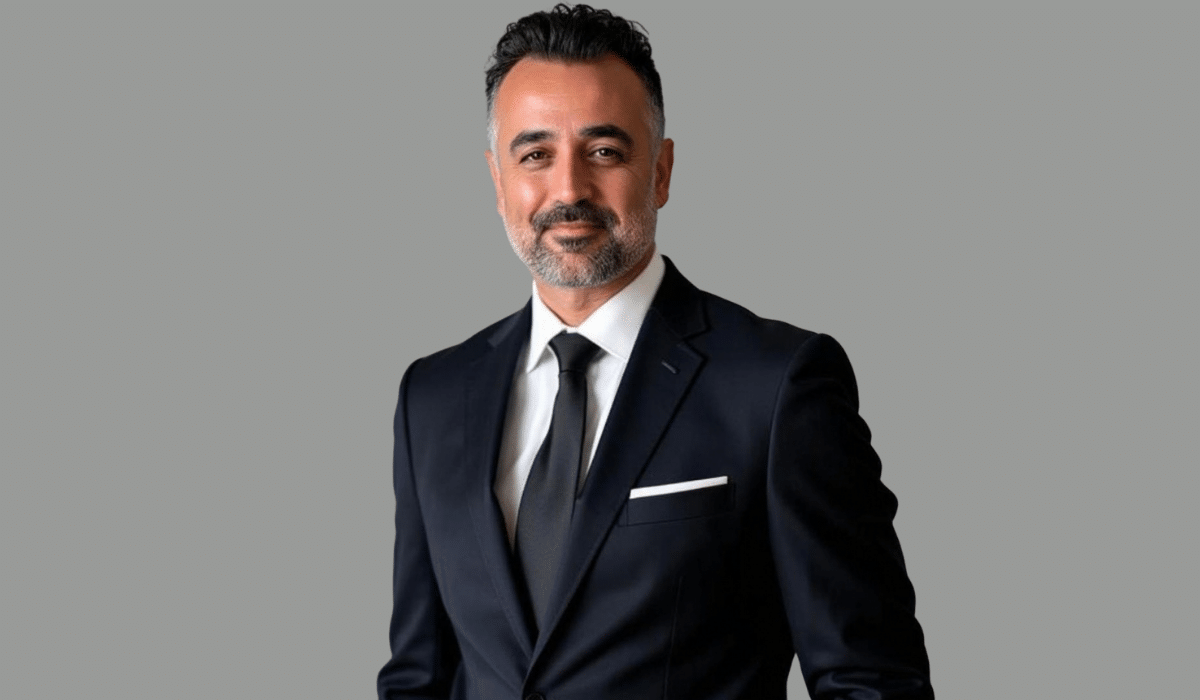
Matt Kazemi
“Most loan officers don’t need more leads; they need better systems,” says Matt Kazemi, a mortgage executive with 25 years of experience building national lending platforms. Kazemi, who has advised firms on transitioning from transactional volume to repeatable growth, argues that the industry’s future isn’t in finding better salespeople, but in building better machines. “If your business can’t run without you, it isn’t scalable. It’s just a high-paying job.”
The high-tech, high-touch paradox
The tech-driven transformation isn’t just about speed. While cloud-banking platforms like Blend have successfully digitized the front-end application, the real revolution is happening in the “back-office stack.”
The modern “Algorithmic” approach integrates Point of Sale (POS), Loan Origination Systems (LOS), and automated CRM workflows into a single, cohesive engine. This doesn’t replace the human element; it reclaims it. By automating the administrative friction that consumes 80% of an originator’s day, firms are enabling their staff to move from “file-pushers” to “wealth advisors.”
Engineering compliance and referral growth
In the current regulatory environment, the cost of a mistake is higher than ever. Traditional firms treat compliance as a final “check” at the end of the process, a bottleneck that kills speed. The systems-led model, however, builds compliance into the “algorithm” of the loan itself.
By utilizing “compliance-first” scaling, firms can expand into new states with a fraction of the traditional overhead. This allows for a referral-driven business that is built on predictability. When the system is the star, the client experience remains consistent regardless of which loan officer handles the file.
The future of lending
The “Rockstar” isn’t being fired; they are being upgraded. The next generation of mortgage leaders are those who trade their Rolodexes for frameworks. They aren’t looking for the next big marketing “hack”; they are looking for the next operational efficiency.
As the industry matures, the advantage goes to the engineers of the process. In 2026, the most valuable asset a mortgage company can own isn’t a high-volume producer; it’s a system that can create them.


