
Advertorial or Sponsorship User published Content does not represent the views of the Company or any individual associated with the Company, and we do not control this Content. In no event shall you represent or suggest, directly or indirectly, the Company's endorsement of user published Content.
The company does not vouch for the accuracy or credibility of any user published Content on our Website and does not take any responsibility or assume any liability for any actions you may take as a result of reading user published Content on our Website.
Through your use of the Website and Services, you may be exposed to Content that you may find offensive, objectionable, harmful, inaccurate, or deceptive.
By using our Website, you assume all associated risks.This Website contains hyperlinks to other websites controlled by third parties. These links are provided solely as a convenience to you and do not imply endorsement by the Company of, or any affiliation with, or endorsement by, the owner of the linked website.
Company is not responsible for the contents or use of any linked website, or any consequence of making the link.
How to calculate your BMI and understand the result
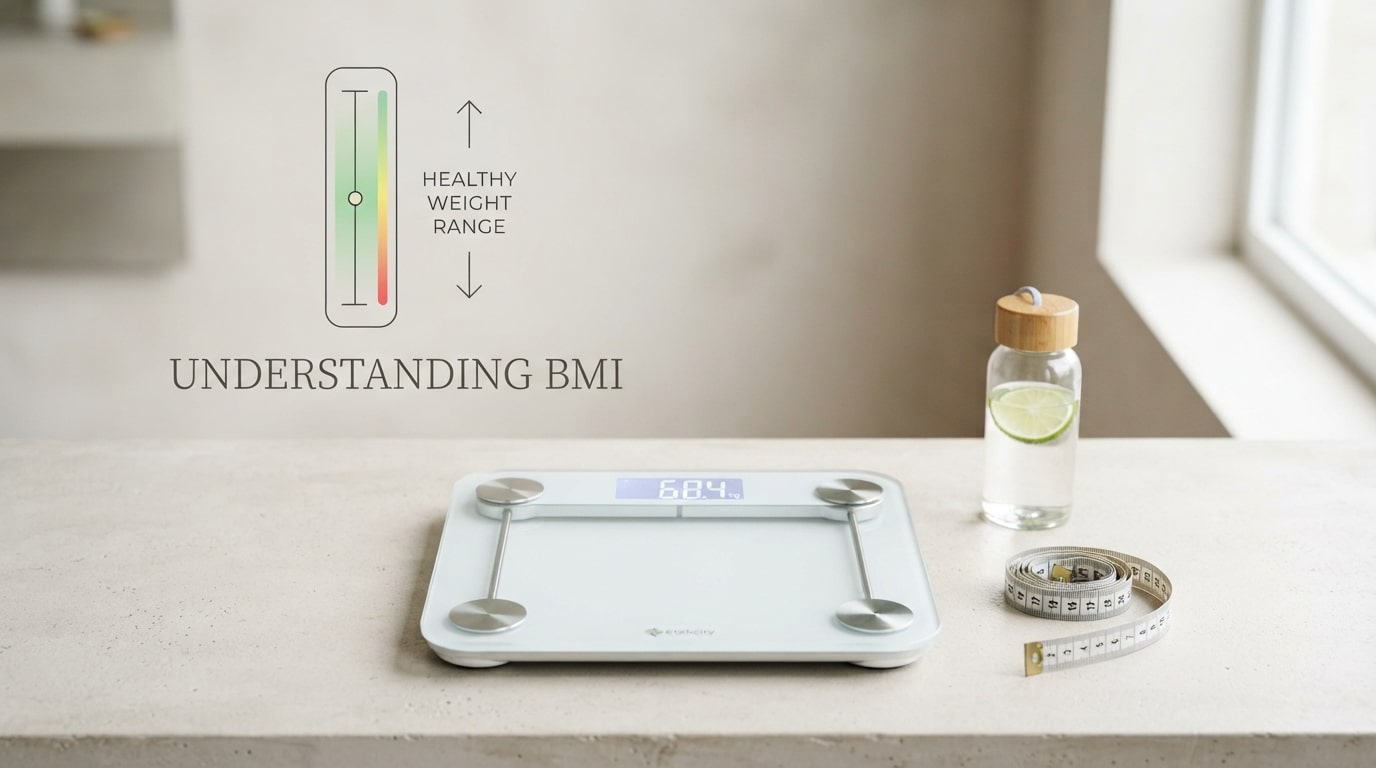
Beyond the number: Understanding the value and limitations of Body Mass Index as a tool for screening and personal health awareness.
Most people have seen the letters BMI on a health form, fitness app, or medical report. The number is often presented beside a label such as “healthy weight,” “overweight” or “underweight,” but the result is rarely explained in much detail.
That can make BMI seem more definitive than it really is.
Body mass index can be a useful starting point for understanding how your weight compares with your height. It is quick to calculate, requires only two measurements, and is widely used by health care professionals and public health organizations. However, it does not directly measure body fat, physical fitness or overall health.
Understanding both the value and the limitations of BMI is important. A number on a screen should provide useful context, not become a judgment about your body or a replacement for professional medical advice.
What does BMI mean?
BMI stands for body mass index. It is a calculation that compares a person’s weight with their height.
The basic idea is simple. Two people may weigh exactly the same, but that weight may have a different meaning depending on how tall they are. A weight of 170 pounds, for example, will not produce the same BMI for someone who is 5 feet 3 inches tall as it will for someone who is 6 feet 2 inches tall.
For adults, BMI is commonly used as a screening measure for identifying weight ranges that may deserve further attention. It is not a medical diagnosis. Health care professionals generally interpret it alongside other information, including medical history, blood pressure, cholesterol, blood glucose, physical activity, eating habits and findings from a physical examination.
BMI is popular partly because it is easy and inexpensive to use. It does not require a laboratory test, body scan or specialized equipment. A reasonably accurate height and weight are enough to produce the result.
How is BMI calculated?
The formula depends on whether you are using metric or U.S. customary measurements.
Using kilograms and meters, the formula is:
BMI = weight in kilograms ÷ height in meters squared
Using pounds and inches, the formula is:
BMI = weight in pounds ÷ height in inches squared × 703
The CDC also provides a metric version for people who know their height in centimeters:
BMI = weight in kilograms ÷ height in centimeters ÷ height in centimeters × 10,000
Although the formulas look technical at first, the calculation is fairly manageable once the height is converted correctly.
A BMI calculation using metric units
Suppose someone weighs 72 kilograms and is 1.70 meters tall.
First, square the height:
1.70 × 1.70 = 2.89
Next, divide the weight by that result:
72 ÷ 2.89 = 24.91
The person’s BMI is approximately 24.9.
A BMI calculation using pounds and inches
Now suppose someone weighs 165 pounds and is 5 feet 8 inches tall.
Convert the height entirely into inches:
5 feet = 60 inches
60 + 8 = 68 inches
Square the height:
68 × 68 = 4,624
Divide the weight by the squared height:
165 ÷ 4,624 = 0.03568
Multiply the result by 703:
0.03568 × 703 = 25.08
The person’s BMI is approximately 25.1.
The calculation itself is not complicated, but mistakes can happen when converting feet to inches, centimeters to meters, or when squaring the height.
Using a BMI calculator
For anyone who would rather avoid doing the formula by hand, a BMI calculator provides a much quicker option.
You usually only need to select your preferred measurement system and enter your height and weight. The calculator completes the formula and displays both your BMI number and its corresponding adult weight category.
A BMI calculator is especially convenient when you want to compare different measurements. For example, someone tracking a gradual change in weight may want to see how the result changes over several months. It can also help avoid common calculation mistakes, such as entering feet without converting the full height into inches.
The important part is entering accurate information. A small error in height can noticeably change the result because height is squared in the formula. Measure your height without shoes and use a reliable scale for your weight. It is also better to use measurements taken around the same time and under similar conditions when comparing results over time.
The calculator should be treated as an informational tool. It can tell you where your result falls within commonly used BMI ranges, but it cannot evaluate your muscle mass, body composition, medical history or individual health risks. Adult BMI calculators are generally designed for people aged 20 and older. Children and teenagers require age- and sex-specific BMI percentiles instead of the standard adult categories.
Understanding adult BMI categories
For adults aged 20 and older, the CDC uses the following BMI ranges:
| BMI result | Adult weight category |
| Below 18.5 | Underweight |
| 18.5 to 24.9 | Healthy weight |
| 25.0 to 29.9 | Overweight |
| 30.0 or above | Obesity |
| 30.0 to 34.9 | Class 1 obesity |
| 35.0 to 39.9 | Class 2 obesity |
| 40.0 or above | Class 3 obesity |
These categories are applied to adults regardless of age, sex or race, but the same BMI can represent different levels of body fat or health risk in different individuals. The categories are meant for screening and should not be treated as a complete assessment of health.
What an underweight BMI may mean
A BMI below 18.5 falls within the underweight category.
That result does not automatically mean someone is unhealthy. Some people naturally have a smaller body frame or lower. In other cases, a low BMI may be related to inadequate nutrition, a recent illness, loss of appetite, digestive difficulties, medication effects or another medical issue.
The context matters.
Someone whose weight has always been stable and who feels well may have a very different situation from someone who has lost a significant amount of weight without trying. An unexpected change is often more important than the number alone.
People concerned about a low BMI should avoid assuming that simply eating more highly processed or calorie-dense food is the best solution. A health care professional or registered dietitian can help identify whether weight gain is appropriate and recommend a balanced approach based on the person’s needs.
What the healthy-weight range means
A BMI between 18.5 and 24.9 is placed in the healthy-weight category for adults.
It is tempting to interpret this as proof that everything is fine, but BMI cannot provide that kind of guarantee. A person can fall within this range and still have high blood pressure, high cholesterol, poor nutrition, low physical activity or another health concern.
The category simply suggests that the person’s weight is within a commonly used range for their height.
Similarly, people should not feel pressured to reach one exact BMI number. The healthy-weight category covers a range because bodies differ naturally. Overall patterns, such as regular movement, nutritious meals, adequate sleep, stable energy levels and appropriate medical care, usually offer more useful information than trying to maintain a particular decimal point.
What an overweight BMI may mean
A BMI between 25.0 and 29.9 is categorized as overweight.
This may indicate that a person is carrying more body fat than is generally recommended for their height, but that conclusion cannot be made from BMI alone. Muscle, bone and fat all contribute to body weight, and the BMI formula cannot separate them.
This limitation is particularly noticeable in people with a large amount of muscle. A strength athlete, for instance, may have a BMI above 25 because muscle adds weight, even if that person has relatively little body fat. The CDC specifically notes that people with substantial muscle may fall within the overweight or obesity ranges even though BMI does not distinguish muscle and bone from fat.
For someone who is not highly muscular, a result in this range may still be worth discussing with a health care provider, particularly when it appears alongside other concerns such as high blood pressure, elevated blood sugar, increased waist size, joint discomfort or a strong family history of certain conditions.
Understanding a BMI of 30 or higher
A BMI of 30 or above falls within the obesity category, which is divided into three classes.
The classes help describe the degree to which weight is above the standard range for height. They should not be used as labels for a person or as assumptions about someone’s behavior, appearance, discipline or health.
Higher BMI levels are associated with an increased risk of several health problems, including high blood pressure, high cholesterol, type 2 diabetes, heart disease, sleep apnea, joint problems and some other chronic conditions. Risk is not identical for everyone, however, and BMI is only one part of the assessment.
Anyone who receives a result in this range should avoid extreme diets or sudden exercise programs based solely on the number. Sustainable changes are usually safer and more effective when they take a person’s medical history, mobility, medications, daily routine and nutritional needs into account.
Why BMI does not tell the whole story
The greatest weakness of BMI is also easy to understand: It only uses height and weight.
It does not know whether someone’s weight comes mainly from fat, muscle, bone or a combination of all three. It does not show where body fat is stored, and it does not directly measure cardiovascular fitness, strength, flexibility, blood pressure, blood sugar, cholesterol or the quality of someone’s diet.
Two people can therefore have the same BMI and very different health profiles.
One may exercise regularly, have normal laboratory results, sleep well and carry a significant amount of muscle. The other may have low physical activity, a larger waist circumference, high blood pressure and elevated glucose levels. Their BMI numbers could be identical even though the broader picture is not.
For this reason, the CDC recommends considering BMI with factors such as medical and family history, physical activity, diet, sleep, blood pressure, muscle mass, glucose and cholesterol.
BMI is best understood as an opening question rather than a final answer.
Look at trends, not just one measurement
A single BMI result offers only a snapshot.
Weight can change from day to day because of hydration, meals, clothing, salt intake, digestion and other short-term factors. A small movement in BMI does not necessarily represent a meaningful change in body fat or health.
Longer-term trends are usually more informative.
If your BMI has remained relatively stable for years, that pattern may be more useful than a small weekly fluctuation. A steady and unexplained increase or decrease, however, may deserve attention — especially if it occurs alongside fatigue, appetite changes, shortness of breath, pain, digestive symptoms or other concerns.
When tracking your BMI, avoid checking it several times a day. Measuring under similar conditions every few weeks or months can provide a clearer picture without turning the process into a source of anxiety.
BMI Is different for children and teenagers
The adult BMI ranges should not be applied directly to children or teenagers.
Young people are still growing, and body composition changes with age and development. Their BMI is therefore compared with other children of the same age and sex using BMI-for-age percentiles.
A child or teenager’s result may be described as underweight, healthy weight, overweight or obesity based on where the BMI falls on an appropriate growth chart, not simply by using adult cutoffs such as 18.5 or 25.
The CDC recommends a dedicated child and teen BMI calculator for people aged 2 through 19. That type of calculator uses height, weight, age and sex to produce both the BMI and the relevant percentile. Results should be discussed with a qualified health care professional, particularly when there are concerns about growth, nutrition, body image or sudden weight changes.
Common BMI calculation mistakes
One common mistake is entering height incorrectly. Someone who is 5 feet 10 inches tall should enter 70 inches when using the U.S. formula, not 5.10 feet.
Another error is forgetting to square the height. Dividing weight by height only once will produce an incorrect result.
Mixing measurement systems also causes problems. Weight in pounds cannot be used directly with height in meters unless the entire formula and conversion are adjusted correctly. It is safest to use either kilograms with meters or pounds with inches.
Rounding too early can slightly change the result as well. Keep the full numbers during the calculation and round the BMI at the end.
Finally, remember that a correct calculation can still be misinterpreted. The most important mistake to avoid is treating BMI as a diagnosis or as a complete description of your health.
What should you do with your result?
Start by keeping the number in perspective.
A BMI in the healthy-weight range does not eliminate the need for regular health checks, balanced nutrition, physical activity or adequate sleep. A result outside that range does not automatically mean you are unhealthy or that you need to make a dramatic change immediately.
Consider the result alongside questions such as:
- Has your weight changed unexpectedly?
- How is your energy level?
- Are you physically active in a way that is appropriate for you?
- What is your blood pressure?
- Have you had your glucose or cholesterol checked when recommended?
- Do you have a family history of weight-related health conditions?
- Are your eating habits supporting your health and daily routine?
- Do you have concerns about your relationship with food or body image?
When the result is concerning, unexpected or difficult to interpret, speak with a health care professional. They can assess the number within the context of your overall health rather than responding to BMI alone.
Final thoughts
BMI is useful because it takes a basic measurement, body weight, and places it in the context of height. It is easy to calculate manually, and a BMI calculator can produce the result within seconds.
The number can help identify a weight range that may deserve attention, but it cannot distinguish muscle from fat, determine where fat is stored, or diagnose a health condition. It should be considered alongside medical history, lifestyle, physical measurements and appropriate health tests.
Use BMI as a starting point for a better-informed conversation, not as a verdict on your health or your body.
A calculator can give you the number. Understanding what that number does and does not mean is the part that truly matters.


