
Advertorial or Sponsorship User published Content does not represent the views of the Company or any individual associated with the Company, and we do not control this Content. In no event shall you represent or suggest, directly or indirectly, the Company's endorsement of user published Content.
The company does not vouch for the accuracy or credibility of any user published Content on our Website and does not take any responsibility or assume any liability for any actions you may take as a result of reading user published Content on our Website.
Through your use of the Website and Services, you may be exposed to Content that you may find offensive, objectionable, harmful, inaccurate, or deceptive.
By using our Website, you assume all associated risks.This Website contains hyperlinks to other websites controlled by third parties. These links are provided solely as a convenience to you and do not imply endorsement by the Company of, or any affiliation with, or endorsement by, the owner of the linked website.
Company is not responsible for the contents or use of any linked website, or any consequence of making the link.
THC gummies and drinks face ban under provision in government spending bill
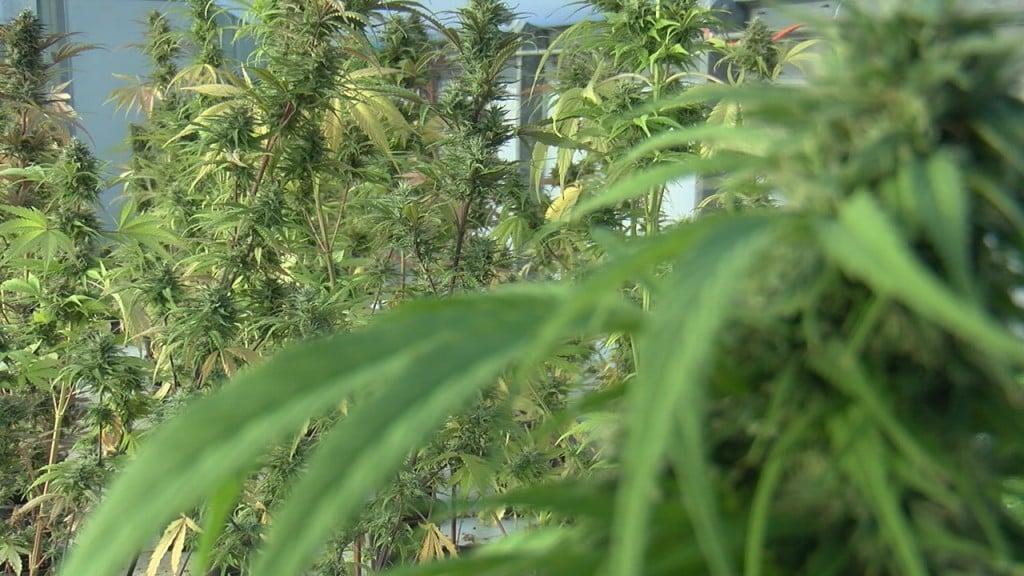
The legal grey zone surrounding hemp-derived THC products may be closing fast. A new provision tucked inside a federal government spending bill could dramatically restrict or eliminate many THC gummies and THC-infused drinks currently sold across the United States.
For consumers, this might feel sudden. For policymakers, it has been building for years.
How hemp opened the door
The turning point came in 2018 when Congress passed the Agriculture Improvement Act of 2018. That law legalised hemp, defining it as cannabis containing no more than 0.3 percent delta-9 THC by dry weight.
The key phrase is “by dry weight.” That percentage-based definition made sense for raw plant material. But when applied to heavy products like gummies and beverages, it created an unexpected result.
Because edibles and drinks contain sugar, water, and other ingredients, manufacturers could include measurable amounts of delta-9 THC while still staying under the 0.3 percent threshold. As long as the THC was derived from hemp and the final product met the percentage rule, it qualified as federally legal hemp.
That technical distinction fueled a booming market for THC gummies and infused drinks sold in smoke shops, convenience stores, and online.
What the spending bill would change
The new government spending bill includes language that would tighten the federal definition of legal hemp products. If enacted, it could effectively ban intoxicating hemp-derived THC products at the federal level.
The proposed change would close the dry-weight loophole that allowed psychoactive edibles and beverages to qualify as hemp. Instead of focusing only on percentage, the new provision would more strictly limit or prohibit consumable products containing intoxicating THC.
In practical terms, that means many THC gummies and THC drinks currently on shelves could become federally illegal overnight.
Why lawmakers are acting now
Supporters of the ban argue that intoxicating hemp products have outpaced regulation. Unlike state-licensed cannabis dispensaries, hemp-derived THC products are often sold outside tightly controlled systems. Age verification standards vary. Product testing requirements are inconsistent. Labelling practices differ widely.
Some lawmakers and public health advocates say the market has created easy access to psychoactive substances without sufficient guardrails. They point to concerns about youth exposure, inconsistent potency, and accidental overconsumption.
The federal government, in this view, is stepping in to reassert control over a rapidly expanding segment of the cannabis market.
Industry pushback
The hemp industry strongly disagrees with the proposed crackdown.
Manufacturers and retailers argue that they have operated within the legal boundaries established by Congress. They emphasise that the 2018 Farm Bill clearly defined hemp by THC percentage, and businesses structured products accordingly.
Industry leaders also warn of economic fallout. The hemp-derived cannabinoid market represents billions of dollars in revenue and supports thousands of jobs across farming, manufacturing, distribution, and retail sectors.
A sudden federal ban could force companies to shut down product lines, lay off employees, and absorb significant financial losses.
The broader cannabis tension
This debate reveals a deeper tension in American cannabis policy. Marijuana remains federally illegal, yet many states have legalized it for medical or recreational use. Meanwhile, hemp-derived THC products exist in a parallel space, often outside state-regulated cannabis systems.
The result is a patchwork of rules. In some states, THC gummies must be purchased at licensed dispensaries under strict controls. In others, hemp-derived versions can be sold in gas stations with minimal oversight.
Federal lawmakers appear to be responding to that inconsistency.
What happens if the ban passes
If the spending bill provision becomes law, companies selling hemp-derived THC gummies and drinks would likely have to pull products from shelves or reformulate them to remove intoxicating levels of THC.
Retailers could face new compliance risks. Online sales might be curtailed. Consumers accustomed to purchasing these products outside dispensaries may see availability shrink dramatically.
State-regulated cannabis markets might benefit from reduced competition from hemp-derived alternatives. On the other hand, some analysts warn that overly restrictive measures could push demand toward unregulated or illicit sources.
A market built on a decimal point
At the center of this issue is a single number: 0.3 percent. That small percentage created a legal pathway for hemp-derived intoxicating products. Now lawmakers are reconsidering whether that framework still makes sense for modern consumer markets.
Drug policy often turns on technical definitions. In this case, a dry-weight formula designed for agriculture shaped an entire consumer industry.
The government’s proposed response suggests that policymakers believe the market has stretched that definition too far.
Future of THC products in USA
THC gummies and infused drinks have become widely available in a remarkably short time. Their future now depends on how Congress resolves this spending bill and whether the hemp definition is rewritten.
If the provision passes, it could mark one of the most significant federal shifts in cannabinoid policy since hemp was legalized. If it fails, the debate over intoxicating hemp products will almost certainly continue.
The outcome will determine whether these products remain part of the mainstream retail landscape or return to a tightly controlled regulatory environment. In either case, the evolving relationship between hemp, marijuana, and federal law is far from settled.
Disclaimer: This article is for informational purposes and is not medical or legal advice. THC effects vary by person and dosage. Consult a healthcare professional before use, especially if pregnant, taking medication, or having underlying conditions. Cannabis laws vary; verify local compliance before purchase.


