
Advertorial or Sponsorship User published Content does not represent the views of the Company or any individual associated with the Company, and we do not control this Content. In no event shall you represent or suggest, directly or indirectly, the Company's endorsement of user published Content.
The company does not vouch for the accuracy or credibility of any user published Content on our Website and does not take any responsibility or assume any liability for any actions you may take as a result of reading user published Content on our Website.
Through your use of the Website and Services, you may be exposed to Content that you may find offensive, objectionable, harmful, inaccurate, or deceptive.
By using our Website, you assume all associated risks.This Website contains hyperlinks to other websites controlled by third parties. These links are provided solely as a convenience to you and do not imply endorsement by the Company of, or any affiliation with, or endorsement by, the owner of the linked website.
Company is not responsible for the contents or use of any linked website, or any consequence of making the link.
Top 10 ChatGPT visibility tracker tools to monitor your brand in AI search

Illustration by Fame Fernandez
In today’s AI-first world, tools like ChatGPT, Gemini, Perplexity, and Claude have become brand gatekeepers. If your brand doesn’t show up in AI-generated answers, you’re invisible to a rapidly growing segment of users.
This guide explains what ChatGPT visibility is, why it matters, how to evaluate tracking tools, and the top 10 ChatGPT visibility trackers in 2026.
TL;DR
- ChatGPT visibility measures how often your brand appears in AI responses—and how well you’re described.
- It’s now as important as Google SEO because users increasingly rely on AI assistants for product research and decisions.
- The best tools track brand mentions, citations, sentiment, competitors, prompt-level trends, and historical data across multiple AI systems.
- PromptRush is the strongest all-around ChatGPT visibility tracker for marketers.
- Improving AI visibility requires stronger entity clarity, authoritative content, PR mentions, and continuous monitoring of prompt-level gaps.
- AI visibility is becoming a core part of modern SEO and brand strategy—brands that optimize early gain a significant advantage.
What is ChatGPT visibility?
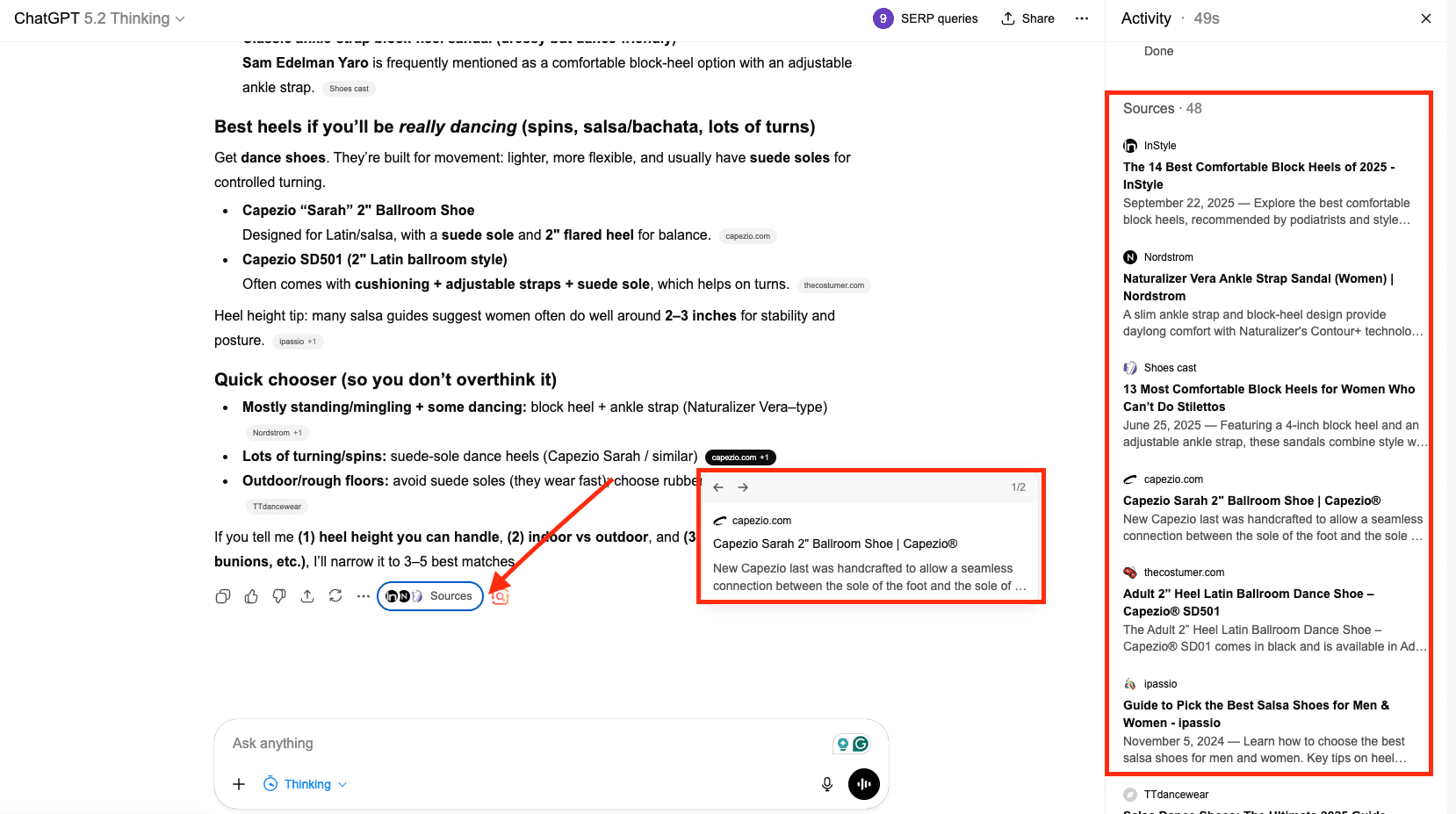
ChatGPT visibility is the measurement of how often, how accurately, and in what context your brand appears in AI-generated responses.
It includes several components:
- Brand mentions: Does AI name your brand?
- Citation links: Does it link to your site or a competitor’s?
- Answer position: Are you the first, second, or last brand mentioned?
- Sentiment and framing: Is the tone positive, neutral, or negative?
- Entity clarity: Does AI understand who you are, or confuse you with someone else?
Unlike Google Search Console, AI tools provide no built-in analytics, so visibility tracking requires dedicated tools.
Why tracking ChatGPT visibility matters
AI assistants are increasingly:
- Product recommenders
- Category explainers
- Buying advisors
- Brand comparers
If AI doesn’t mention you, you don’t exist in that moment of decision.
Tracking matters because:
- You can see how ChatGPT represents your brand
- You can detect wrong, outdated, or misleading descriptions
- You can identify competitors being recommended instead of you
- You can monitor visibility drops before they impact revenue
- You can understand what influences AI responses (links, authority, content)
ChatGPT has become the new “homepage” for many users. Visibility is now a competitive moat.
Types of AI visibility tracking tools
These tools generally fall into four categories:
1. Prompt-based ChatGPT trackers
Simulate or monitor prompts inside ChatGPT, Claude, Gemini, etc.
2. AI overview / SGE trackers
Track visibility inside Google’s AI Overviews and AI Mode.
3. Cross-LLM multi-engine trackers
Monitor ChatGPT, Perplexity, Gemini, Claude, and others in one system.
4. Developer-focused LLM trackers
API-first tools for technical teams that want to integrate LLM visibility into internal systems.
How to choose the best ChatGPT visibility tracker
Evaluate tools based on:
- Visibility rate (VR): % of prompts where you appear
- Share of voice (SoV): Mentions vs. competitors
- Response position: Your placement in the answer
- Sentiment analysis: Tone and framing
- Citation tracking: Which URLs AI sources
- Entity clarity detection
- Competitor monitoring
- Historical visibility trends
- Real-time alerts for visibility drops
- Multi-LLM support
Your best tool depends on your goals—SEO, brand analysis, competitive intelligence, content strategy, or enterprise reporting.
Top 10 ChatGPT visibility tracker tools
1. PromptRush – Best Overall AI Visibility Tracker

PromptRush
PromptRush is an AI rank tracker that shows how your brand appears in ChatGPT, Gemini, Claude, and other AI tools. You can see when your name comes up, which prompts caused those mentions, and how your visibility compares to competitors. It works as a ChatGPT visibility tracker and helps you understand what AI systems say about you.
Everything you need is in one place. You can check brand mentions, track several products, view the prompts and keywords detected, and compare your presence to other brands. The AI overviews tracker also shows which websites influence AI answers and how that changes over time. Weekly scans and the built-in AI prompt tracker help you follow trends by product, category, or keyword group.
The team behind PromptRush has more than 10 years of SEO and marketing experience. Users often mention how quick and personal the support is.
The platform is growing fast, with new updates and features coming regularly. As one of the best ChatGPT visibility tracker options today, it helps brands stay informed in the new world of AI search.
2. Conductor – Best AI visibility tracker for enterprise brands

Conductor
Conductor is the only end-to-end, enterprise AEO platform built on the industry’s most complete data engine. It gives enterprise teams a unified view of AI and traditional search performance, scaled AI content generation, and 24/7 website monitoring — all in one platform. Where many platforms focus on a single piece of the puzzle, Conductor covers the full content lifecycle from insight to creation to measurement. Its newest offering, AgentStack, extends the platform further with MCP and API infrastructure, native LLM apps for ChatGPT, Claude, and Copilot, and turnkey AI agents that automate content and technical AEO workflows without requiring engineering resources. Named a Leader in the Forrester Wave for SEO platforms and rated #1 on G2 and TrustRadius by enterprise marketers.
**Best for:** Enterprise marketing, AEO/SEO, and content teams that need a complete AEO platform — not just a monitoring layer — backed by proprietary search intelligence and purpose-built
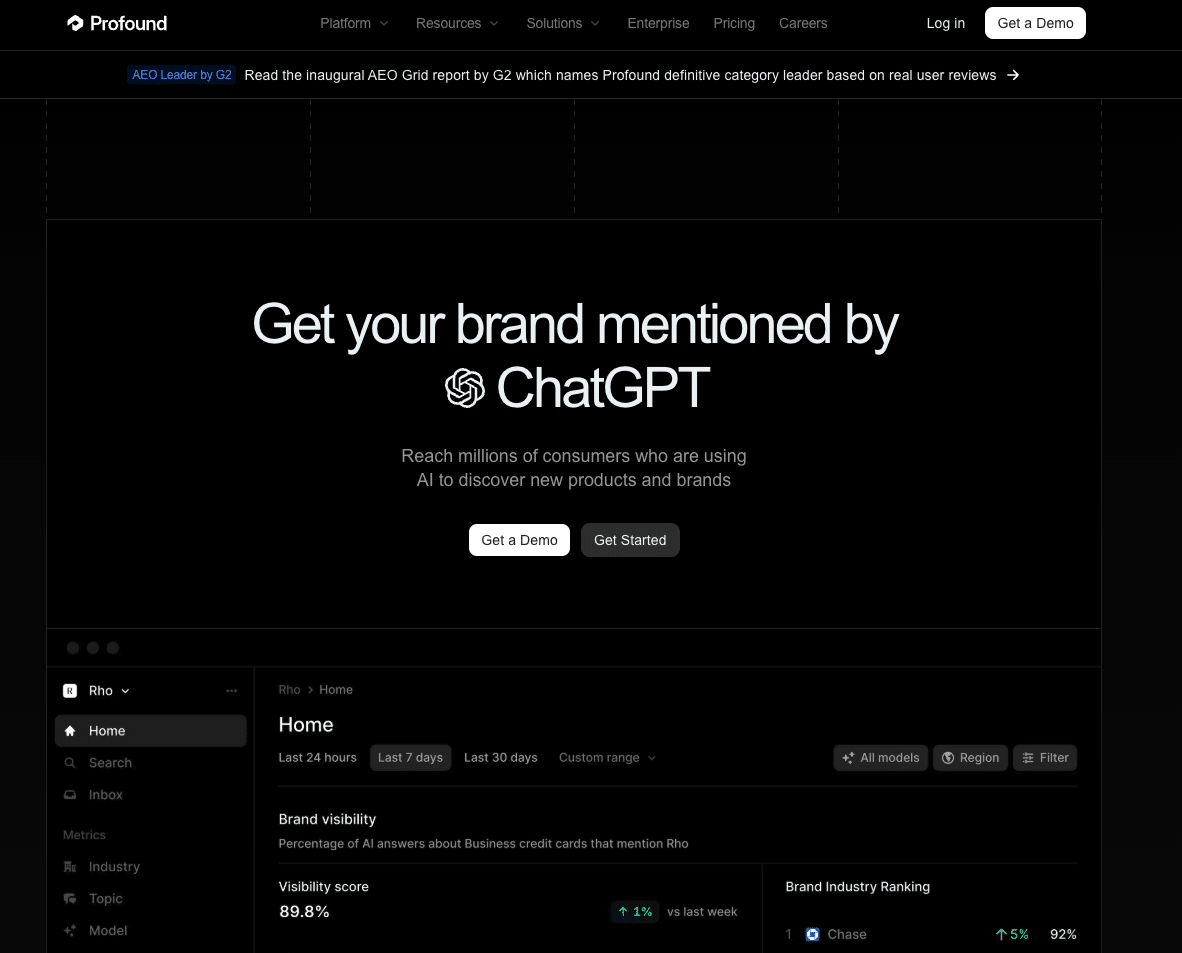
3. ProFound – Enterprise-Level AI Mention Tracker
ProFound
ProFound is a high-end AI visibility tool focused on deep analytics and performance tracking. It gives enterprise teams access to detailed reporting, historical data trends, and a customizable dashboard for brand monitoring across AI platforms. It’s especially helpful for large organizations managing multiple domains or brands.
While its interface caters more to data analysts than marketers, ProFound provides reliable detection of brand mentions in AI-generated content. The platform offers rich exports, integrations with enterprise tools, and custom alerts for AI shifts.
Best for: Enterprise users, agencies, and analysts who prioritize detailed AI tracking reports.
4. Ahrefs – AI Search Insights Add-on

Ahrefs
Ahrefs has added AI search tracking features on top of its well-established SEO toolkit. The AI Search Insights module helps you monitor how your domain appears in AI-generated search snippets—especially within Google’s Search Generative Experience (SGE). It ties well with traditional SEO data, giving users a hybrid view of organic and AI-powered search performance.
That said, Ahrefs is more focused on Google’s AI updates than assistant platforms like ChatGPT or Claude, and it doesn’t show prompt-level data.
Best for: SEO teams using Ahrefs who want to extend their insights into AI-powered search snippets.
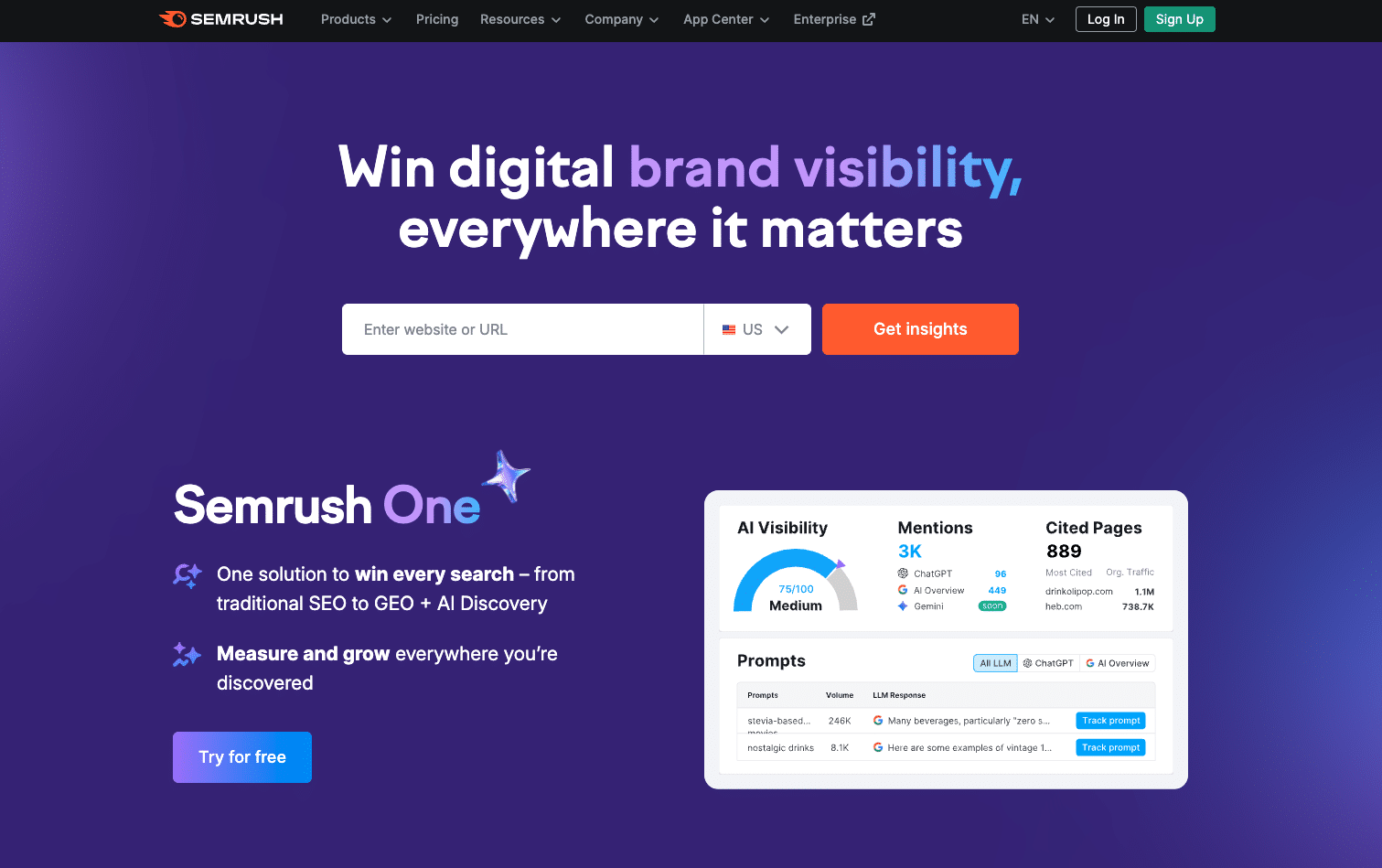
5. Semrush – SGE & AI Snapshot Tracker
Semrush
Semrush brings AI overview tracking into its massive SEO platform, helping brands monitor how they show up in Google’s generative search results. You can track keywords that trigger AI snapshots, monitor your domain’s presence, and compare changes over time.
The integration is smooth for existing Semrush users, but it doesn’t yet support visibility tracking in AI assistants like ChatGPT or Claude.
Best for: SEO pros already using Semrush looking to expand into AI result tracking.
6. SE Ranking AI Search Toolkit

SE Ranking
SE Ranking has introduced an AI search toolkit that focuses on monitoring branded and non-branded keyword visibility in AI-generated Google results. Its strength lies in visualizing AI snippets and identifying changes in how your brand is portrayed.
However, this tool is mostly limited to SGE and lacks coverage across broader AI assistants or prompt tracking features.
Best for: Small to mid-size businesses wanting affordable AI search visibility, especially for Google.
7. Keyword.com AI Visibility

Keyword.com
Keyword.com’s AI Visibility tool is designed for tracking keyword-based brand appearances in AI snippets. It’s fast, clean, and focused—giving users a simplified look at how often their keywords or brand terms appear in AI results.
While easy to use, it doesn’t offer detailed prompt-level breakdowns or identify which sources influenced AI responses.
Best for: Teams who need straightforward, keyword-focused AI tracking without the bells and whistles.
8. SISTRIX AIO Tracker

SISTRIX
SISTRIX brings a solid AI overview tracker to the European market. It’s particularly good for regional SEO and shows how domains perform in AI-enhanced search experiences across European search engines and languages.
It’s great for multilingual teams but offers limited insight into AI assistants like ChatGPT or Gemini.
Best for: European brands and agencies focused on AI search visibility across multiple regions and languages.
9. Surfer AI Tracker

Surfer AI
Surfer, best known for content optimization, has entered the AI visibility space with a tool that tracks how content performs in AI-generated summaries. It’s a great add-on for writers, SEOs, and content strategists.
However, it’s geared more toward optimizing content for AI than tracking broad brand presence or prompt-based insights.
Best for: Content teams that want to measure AI performance of their optimized blog posts and articles.
10. seoClarity AI Overview Tracker

seoClarity
seoClarity provides an AI Overview Tracker focused on Google’s SGE. It delivers enterprise-level reporting on how structured data, FAQs, and schema impact AI-generated responses. There’s rich insight into SEO content performance, but limited focus on ChatGPT or prompt-based AI assistants.
It’s more technical and ideal for large SEO departments or agencies managing multiple properties.
Best for: Technical SEO teams and enterprise organizations needing structured AI tracking insights.
Common challenges in tracking ChatGPT visibility
AI visibility tracking isn’t straightforward. Challenges include:
Personalization and context
ChatGPT may answer differently for each user.
Response variability
The same prompt can generate different outputs.
Prompt realism
Some tools use unnatural SEO-style prompts—leading to misleading visibility scores.
No standard “visibility score” yet
Tools use different formulas and sampling methods.
AI model updates
ChatGPT updates can cause visibility shifts overnight.
This is why trend insights matter more than absolute numbers.
How to improve your brand visibility in ChatGPT and AI search
1. Strengthen your entity clarity
Make your brand unmistakable across the web:
- Consistent descriptions
- Structured data / schema
- PR coverage
- High-authority profile pages
- Clear product naming
2. Build authoritative content clusters
Cover your categories comprehensively to help LLMs form accurate associations.
3. Earn high-authority mentions
LLMs rely heavily on trusted external sources—PR and earned media matter.
4. Optimize for AI Overviews
Google’s AI snapshots influence what LLMs learn from.
5. Close prompt-level gaps
Use a visibility tracker to:
- Identify missing prompts
- See competitor positioning
- Strengthen your content and positioning accordingly
6. Treat AI visibility like SEO: ongoing, not one-and-done
Set up:
- Alerts
- Weekly monitoring
- Competitive benchmarking
- Continuous content refinement
Frequently Asked Questions
1. What is a ChatGPT visibility tracker?
A ChatGPT visibility tracker is a tool that measures how often your brand appears in ChatGPT responses and other AI-generated answers. It detects brand mentions, website links, sentiment, and competitor presence to give you measurable insights into your AI search visibility and brand visibility across leading AI engines.
2. Why is tracking brand visibility in AI search important?
As users shift to AI search engines like ChatGPT, Gemini, Claude, and Perplexity, your AI visibility determines whether your brand is recommended—or replaced by competitors. Tracking visibility inside ChatGPT helps you monitor how your brand shows up, identify when you’re losing ground, and optimize your content strategy to ensure your brand appears in relevant AI responses.
3. How do AI visibility tools track brand mentions and citations?
AI visibility tools run target queries through a prompt library, analyze AI-generated responses, and record when your brand appears, how it is described, and whether it includes website links. They also track other brands, compare share of voice, and provide historical data so you can monitor ChatGPT visibility trends over time.
4. Do visibility trackers support multiple AI engines like ChatGPT, Perplexity, and Gemini?
Yes. Many modern visibility trackers monitor multiple AI engines, including ChatGPT, Perplexity, Gemini, Claude, and even Google AI Overviews. This gives you a complete view of your AI search presence and helps you track brand mentions consistently across all major LLMs.
5. How can I improve my visibility in ChatGPT and other AI platforms?
You can improve visibility in ChatGPT and other AI platforms by strengthening entity clarity, earning authoritative mentions, optimizing website content, and publishing helpful, expert-level resources. Tracking tools provide actionable insights so you can see where your brand shows up, close gaps where competitors appear instead, and ensure your brand is represented accurately in AI answers.
Conclusion
The way users discover brands is shifting—from search engines to AI assistants. If your brand isn’t being mentioned in ChatGPT, Gemini, or Claude, you’re missing out on a massive opportunity. Tools like PromptRush make it easy to see where you stand, what’s driving those mentions, and how you can improve your AI presence over time.
Whether you’re a startup, agency, or global brand—tracking your AI visibility is no longer optional. Choose a tool that fits your needs, and start optimizing for the future of search today.


